
Full Mouth Rehabilitation Lancaster, Hummelstown, & Lititz
Life-Changing Treatment to Renew Your Smile
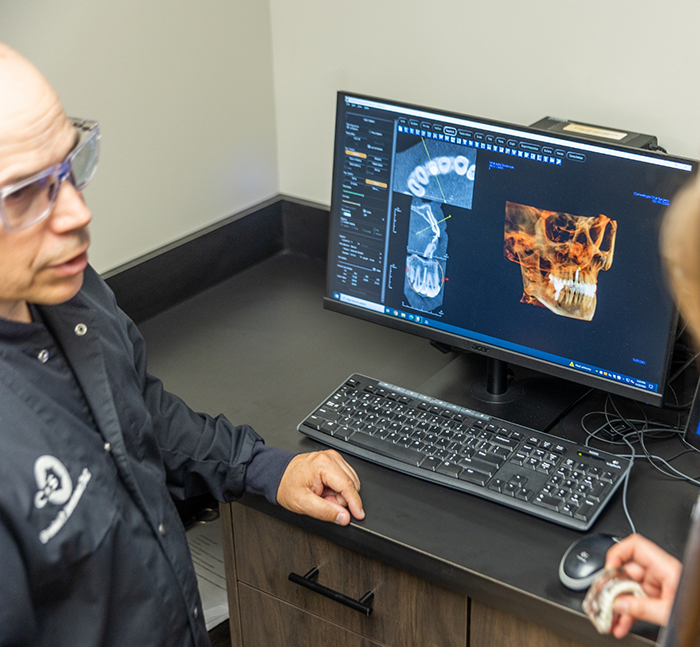
Some patients reach a point of frustration and hopelessness after they have invested large amounts of money in their mouth only to have their dentition continue to fail. Conestoga Oral Surgery offers hope! With proper planning using 3D imaging computer simulation, we have the ability to remove painful/non-restorable teeth, place multiple dental implants, and deliver a prosthesis all within 24-48 hours. Continue reading below to learn more about full mouth rehabilitation in Lancaster, Hummelstown, or Lititz, or contact us directly to set up a consultation.
Why Choose Conestoga Oral Surgery for Full Mouth Rehabilitation?
- Hundreds of Same-Day Implant Surgeries Successfully Completed
- Surgeries Often Completed in 2-4 Hours by Our Skilled Oral Surgeons, Leading to a Faster, More Comfortable Recovery
- Each Prosthesis Is Designed Using 3D Technology to Ensure the Perfect Fit and Proper Stability
Is Full Mouth Rehabilitation Right for Me?
Full mouth reconstruction with dental implants may be right for you if:
- You have lost all or most of your teeth.
- Your remaining natural teeth are in poor condition, and there is no way to reasonably restore their health and function.
- You struggle with uncomfortable, loose, or ill-fitting dentures.
- You are looking for a solution that will efficiently improve both your oral health and appearance.
Many patients are surprised to learn that even if they have been told in the past that they are not candidates for implants, advancements in technology and techniques might now make treatment possible. No matter how long you have struggled with your oral health, we encourage you to schedule a consultation. Our team will guide you through your options and help you make a confident, informed decision about your care.
The Full Mouth Rehabilitation Process
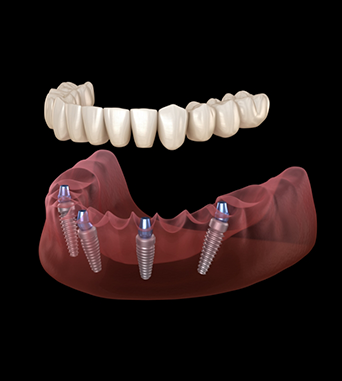
Full mouth rehabilitation with dental implants is a highly coordinated treatment that brings together the expertise of our oral surgeons, our implant coordinators, a restoring general dentist, and a state-of-the-art dental lab. Every step is carefully planned to ensure precision, safety, and a seamless experience.
The procedure is completed in our fully equipped operating room under general anesthesia administered by a Certified Registered Nurse Anesthetist (CRNA) or anesthesiologist. Surgery typically lasts about 2 – 4 hours, and all patients return home the same day to begin recovery. By completing the surgery in a single, coordinated visit, the overall treatment timeline is streamlined significantly, and you may have temporary teeth fixed in place within 24-48 hours, immediately increasing your confidence and ability to smile. Our friendly staff will review postoperative instructions with you, including any dietary restrictions you may need to follow while healing.
Our patient testimonies provide you with insight into how a full mouth reconstruction team, like the one at Conestoga Oral Surgery, comes together to bring you both increased quality of life and comfort in your smile.
All-on-X Rehabilitation
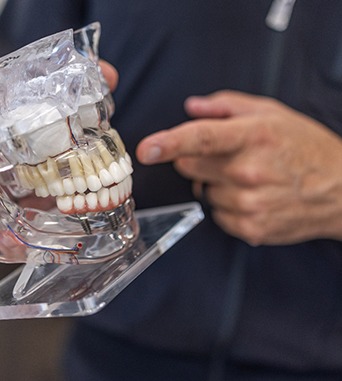
All-on-X is another term for the dental surgical technique used to replace an entire arch of teeth with a few strategically placed dental implants. Using as few as four to six implants, this approach can support a full-arch prosthesis and provide a fixed alternative to traditional removable dentures. The implants are carefully positioned to maximize available bone, which can reduce or eliminate the need for bone grafting.
Understanding the Cost of Full Mouth Rehabilitation
Full mouth rehabilitation is a valuable investment that can significantly improve daily quality of life and support long-term oral health. The cost of full mouth reconstruction varies based on individual circumstances. Since every case is customized, the best way to get accurate pricing is by scheduling a consultation with one of our board-certified oral surgeons. During this visit, we’ll review your treatment plan, provide transparent pricing, and discuss payment options. We accept a variety of dental insurance plans and will submit the insurance claims for you. Many patients also take advantage of flexible, no-interest financing through CareCredit.
Full Mouth Rehabilitation FAQs
Why do I need a second, final prosthesis after my implants have healed?
The teeth placed on surgery day are temporary and designed to protect your implants while you heal. This interim prosthesis allows you to “test drive” the function and esthetics of your new smile, but it is not as strong or refined as your final prosthesis. During the healing process, you will need to follow a strict non-chew diet to avoid putting pressure on the implants and prosthesis. Once your implants are fully healed, your dentist will create a final prosthesis based on your healed gums and the positions of the implants for a stronger, more precise result.
What can I expect to feel after surgery?
It is normal to experience swelling, mild discomfort, bruising, pressure, and a feeling of tightness in the days following surgery. Some patients may also notice slight numbness or soreness as the tissues heal. These symptoms are temporary and will gradually improve. Following your postoperative instructions and taking prescribed medications as directed will help keep you comfortable during recovery.
Will I sound different when I speak after surgery?
You might notice slight changes in your speech at first due to swelling and adjusting to your new prosthetic teeth. This is temporary and improves with time as you recover.
How do I care for my dental implants and keep them clean?
Keeping your implants clean is crucial for their long-term success. In the initial healing phase, it’s important to rinse regularly after meals and gently clean the prosthesis with a soft toothbrush. After several weeks, incorporating a Waterpik into your daily routine will become an important tool to keep the prosthesis clean. Practicing good oral care and keeping routine dental cleanings will help protect your investment.
How long does it take for dental implants to fully heal?
In most cases, implants are evaluated for stability around four months after surgery. This period allows the bone to grow around the implants, a process known as osseointegration, which is critical for the long-term success of the implant. Once healing is confirmed by your oral surgeon, your final prosthesis can be fabricated by your dentist.