
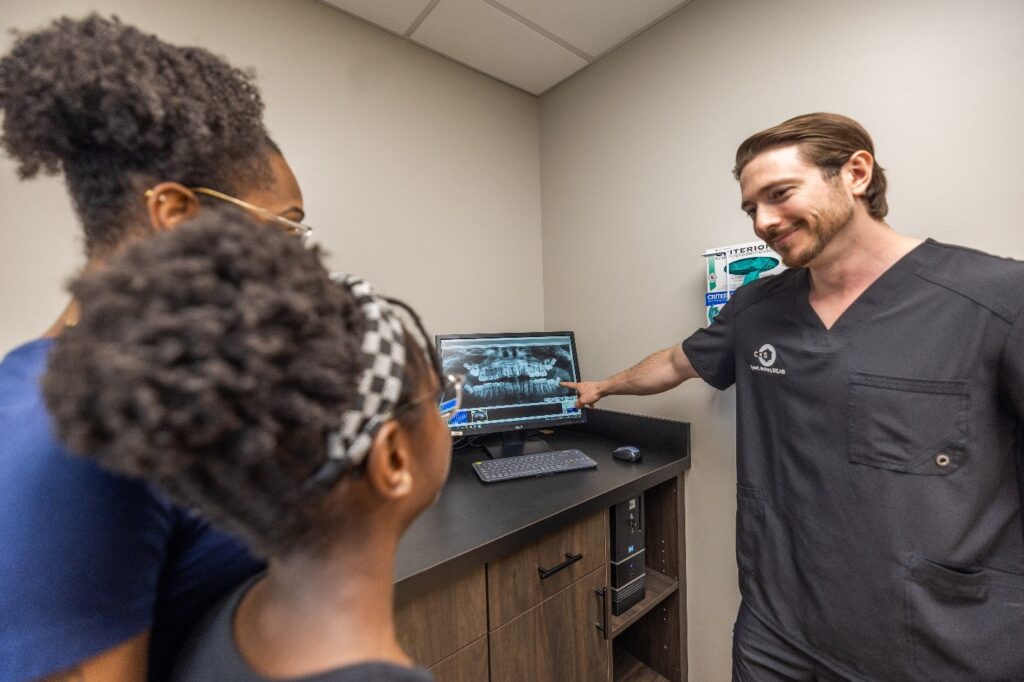
Have you ever been told you need dental X-rays and wondered, “Can’t you already see what’s going on?” When it comes to your oral health, what lies beneath the surface matters just as much as what can be seen during an examination. Radiographic imaging provides valuable information about the teeth, jaws, and surrounding structures that cannot be assessed through a visual exam alone. These images help your dental team in making informed decisions and ensuring that your dental treatment is based on a comprehensive understanding of your oral health.
Why Are X-Rays Important?
Diagnostic dental X-rays are an essential part of many dental treatments and play an important role in helping both your dentist and oral surgeon. These images can reveal oral health problems that may not be visible during an oral exam. X-rays allow dentists and oral surgeons to see under the gums and inside the teeth and jawbones. Dental X-rays can help identify:
- Cavities
- Abscesses or infections
- Bone loss
- Unerupted or impacted teeth
- Cysts or tumors
Modern Dental X-Rays
Dental offices commonly use several types of X-rays, including bitewing (BWX), periapical (PA), panoramic, full-mouth series, and 3D Cone Beam Computed Tomography (CBCT) scans. Each imaging type provides different information that helps your dental provider evaluate your oral health and plan treatment accurately.
Thanks to modern digital technology and advanced imaging techniques, radiation exposure from dental X-rays has been greatly reduced over the years. Today’s digital X-rays use significantly lower radiation doses than older film-based imaging while still producing highly detailed images that improve diagnosis and treatment planning.
Are Dental X-Rays Safe?
Many patients have concerns about dental X-rays, especially when it comes to radiation exposure, safety, and cost. While excessive radiation exposure may increase certain health risks over time, digital dental X-rays involve relatively low levels of radiation, especially when compared to many environmental and background radiation sources people encounter in everyday life. Some patients also wonder whether X-rays are truly necessary or if they will add unnecessary costs. Dental professionals carefully evaluate when X-rays are necessary and use imaging only when it provides important diagnostic information. In most cases, the diagnostic benefits outweigh the minimal potential risks.
Patients may also notice that abdominal and thyroid shielding (such as the use of lead aprons) is no longer routinely used during dental X-rays. Current recommendations from the American Dental Association, the American Academy of Oral and Maxillofacial Radiology, and other medical organizations state that routine shielding is no longer universally recommended because modern X-ray equipment and techniques already minimize radiation exposure very effectively. However, patients may still request shielding if they prefer.
How Dental X-Rays Help Guide Treatment
Dental X-rays are an important part of providing safe, accurate, and effective oral surgery care. X-rays allow dentists and oral and maxillofacial surgeons to develop personalized treatment plans and are especially important when planning more involved procedures such as dental implants, wisdom tooth extractions, and the treatment of oral pathology. Radiographic imaging helps providers evaluate bone structure, tooth position, nerve location, and other important anatomical details before treatment. Modern dental imaging technology continues to make X-rays safer, faster, and more effective than ever before.
About Our Practice
At Conestoga Oral Surgery, we use advanced dental imaging technology, including panoramic X-rays and CBCT scans, to capture highly detailed images of the mouth and jaw. These tools help diagnose oral health conditions and support precise treatment planning for procedures such as dental implants, wisdom tooth removal, and other oral surgery treatments. If your surgeon has recommended dental X-rays for your upcoming procedure, rest assured, they are a safe and essential part of achieving the best possible surgical outcome. To schedule a consultation with us, visit our website or call 717-219-4460.